MLOps: The Model Deployment Pipeline Most AI Features Are Missing After the Demo Works
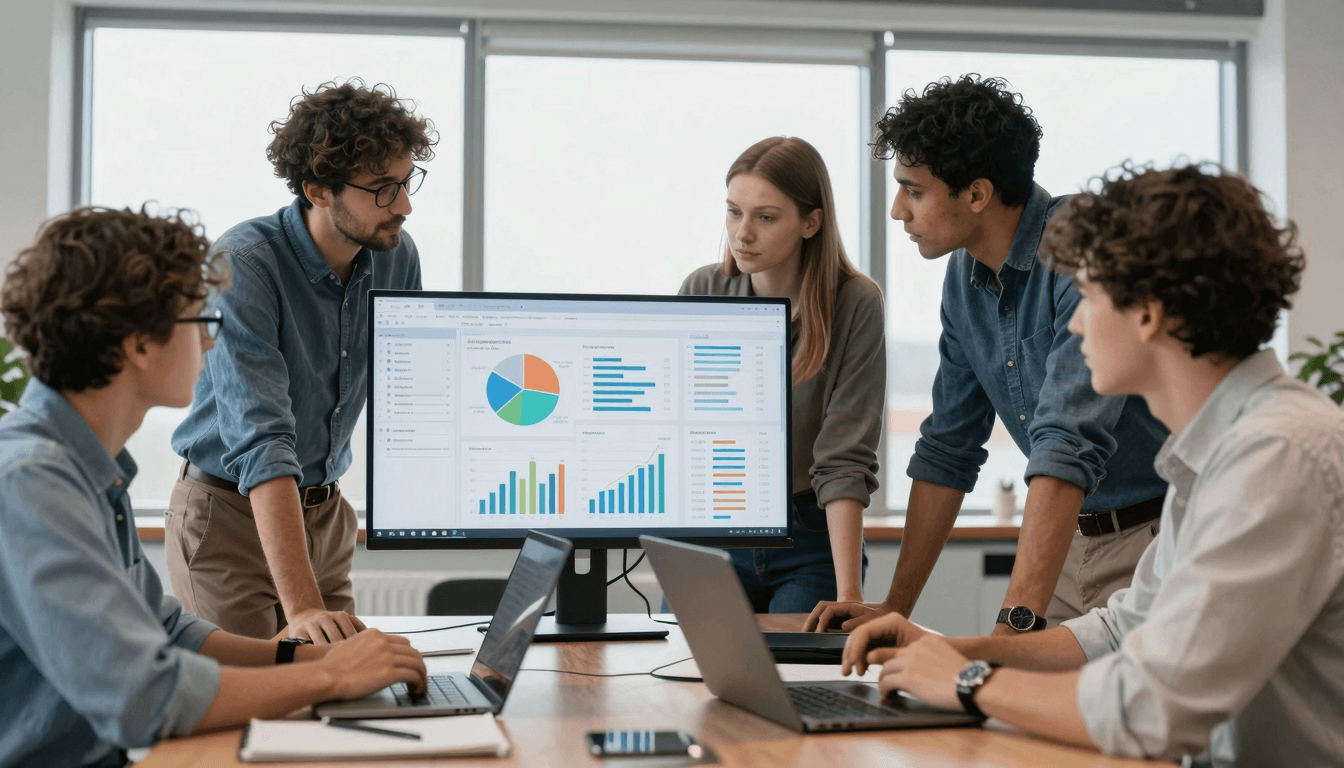
Every AI feature starts the same way: someone fine-tunes a model or wires up an API call, the demo works beautifully in a notebook, and leadership asks "when can this ship?" At AEGONTECH LLC, we've watched this exact moment derail more AI initiatives than any technical limitation of the models themselves. The gap between a working demo and a production-grade AI feature is called MLOps — and most engineering teams discover it only after the feature is already live and quietly failing. AEGONTECH has built and shipped machine learning features across several of our own products, and the lesson repeats: the model is rarely the hard part. The pipeline around it is.
Key Takeaways
- MLOps (machine learning operations) is the discipline of deploying, monitoring, and retraining models with the same rigor traditional software applies to CI/CD — without it, a model that scored 94% accuracy in testing can silently degrade to 60% in production within weeks.
- Model and data versioning are not optional extras; without them, you cannot reproduce a bug, roll back a bad deployment, or explain a regulator why a decision was made.
- Silent model drift — when real-world input data shifts away from training data — is the single most common cause of "the AI just stopped working" tickets, and it is invisible without dedicated monitoring.
- Teams underestimate the infrastructure cost of serving models at scale by 3-5x because they price the training run, not the inference pipeline, the feature store, and the retraining cadence.
- The build-vs-buy decision for MLOps tooling should be made the same way you'd evaluate any other infrastructure investment: against your team's actual scale, not against what a Series-C company's engineering blog recommends.
What Is MLOps, and Why Isn't a Working Demo Enough?
MLOps is the set of practices, tooling, and organizational discipline that takes a machine learning model from a data scientist's notebook to a reliable, monitored, continuously improving production system. A demo answers one question: can this model produce a good output given a curated input? Production asks a much harder question: will this model keep producing good outputs across millions of real, messy, adversarial, and constantly shifting inputs, and will you know the moment it stops?
The difference matters because machine learning software fails differently than traditional software. A bug in a REST API endpoint throws an error you can see in your logs. A degraded model doesn't throw an error — it just gets quietly worse at its job while returning perfectly well-formed responses. Your API gateway (the layer that routes, authenticates, and rate-limits requests to your backend services) reports 200 OK on every call. Your uptime dashboard stays green. Meanwhile, customer trust erodes because recommendations are stale, fraud detection is missing new patterns, or a support chatbot is confidently wrong. According to a widely cited Gartner estimate, over 85% of machine learning projects never make it past the pilot stage into durable production value — and the gap is rarely the model's initial accuracy. It's the missing operational layer around it.
How Do You Version Models and Data the Same Way You Version Code?
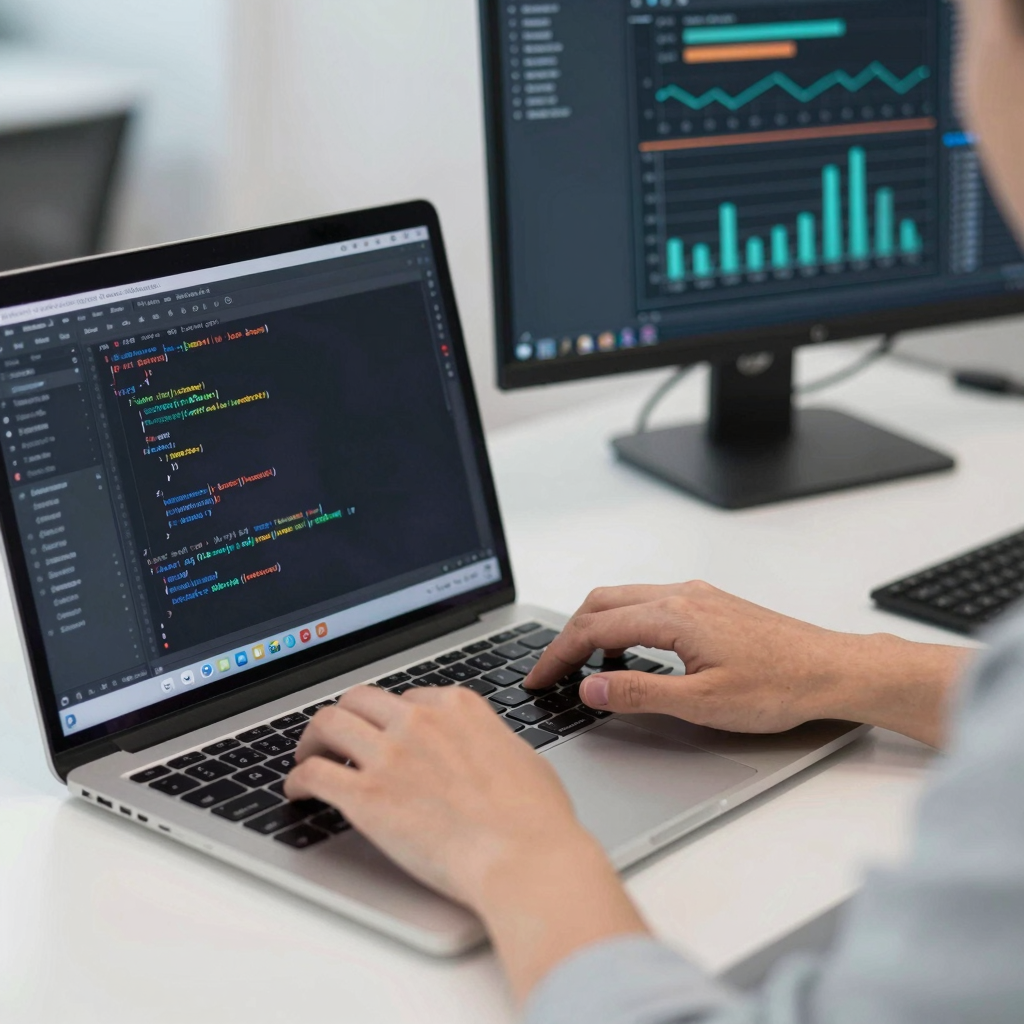
You treat your training data, feature definitions, and model artifacts as first-class citizens in version control, exactly the way Git tracks your application code. This is the part most teams skip, and it's the part that turns a two-hour incident into a two-week forensic investigation.
Here's the concrete practice: every model that reaches production should be traceable to the exact dataset snapshot, feature engineering code, hyperparameters, and training run that produced it. Tools like DVC (Data Version Control) or a managed feature store — a centralized system that stores and serves the pre-computed inputs a model needs, so training and live serving pull from the same definitions instead of drifting apart — solve the data side; MLflow or a cloud-native equivalent (AWS SageMaker Model Registry, Azure ML, GCP Vertex AI) solve the model side. Without this, when a model's behavior changes unexpectedly, you have no way to answer the first question anyone will ask: "what changed?" Was it the input data distribution, a retraining run, a dependency upgrade, or a silent schema change upstream? We've seen internal teams lose entire sprints re-deriving an answer that proper versioning would have surfaced in minutes. As one AEGONTECH engineering lead puts it: "If you can't reproduce a model's exact behavior from six months ago, you don't have a machine learning system — you have a machine learning accident waiting to happen." That's not an exaggeration; it's the operating reality of any team running models against real user data.
What Breaks When You Skip a Model Monitoring and Drift Detection Layer?
What breaks is your ability to know anything is wrong until a customer tells you. Model drift happens when the statistical properties of production input data diverge from the data the model was trained on — user behavior shifts, a new product line launches, a competitor changes the market, or a seasonal pattern kicks in that wasn't in your training window. A fraud-detection model trained on last year's transaction patterns will not automatically recognize this year's new fraud vectors; a recommendation engine trained before a product catalog doubled in size will keep recommending from the old, narrower distribution.
Dedicated monitoring tracks input distribution shifts, output confidence scores, and downstream business metrics (conversion rate, false-positive rate, churn) as first-class signals, alongside your standard observability stack — the practice of instrumenting logs, metrics, and traces so engineers can understand system behavior rather than guess at it. A useful rule of thumb from teams operating this at scale: if you cannot answer "how has this model's output distribution changed over the last 30 days" without running an ad hoc query, you do not have monitoring — you have logging, and logging alone will not catch drift. Real-world data suggests model performance degrades measurably within 60-90 days for most consumer-facing use cases without a retraining loop, which is precisely why the monitoring layer needs to trigger retraining decisions, not just alert a human to eyeball a dashboard once a quarter.
How Should You Structure a Deployment Pipeline for Machine Learning vs Traditional Software?
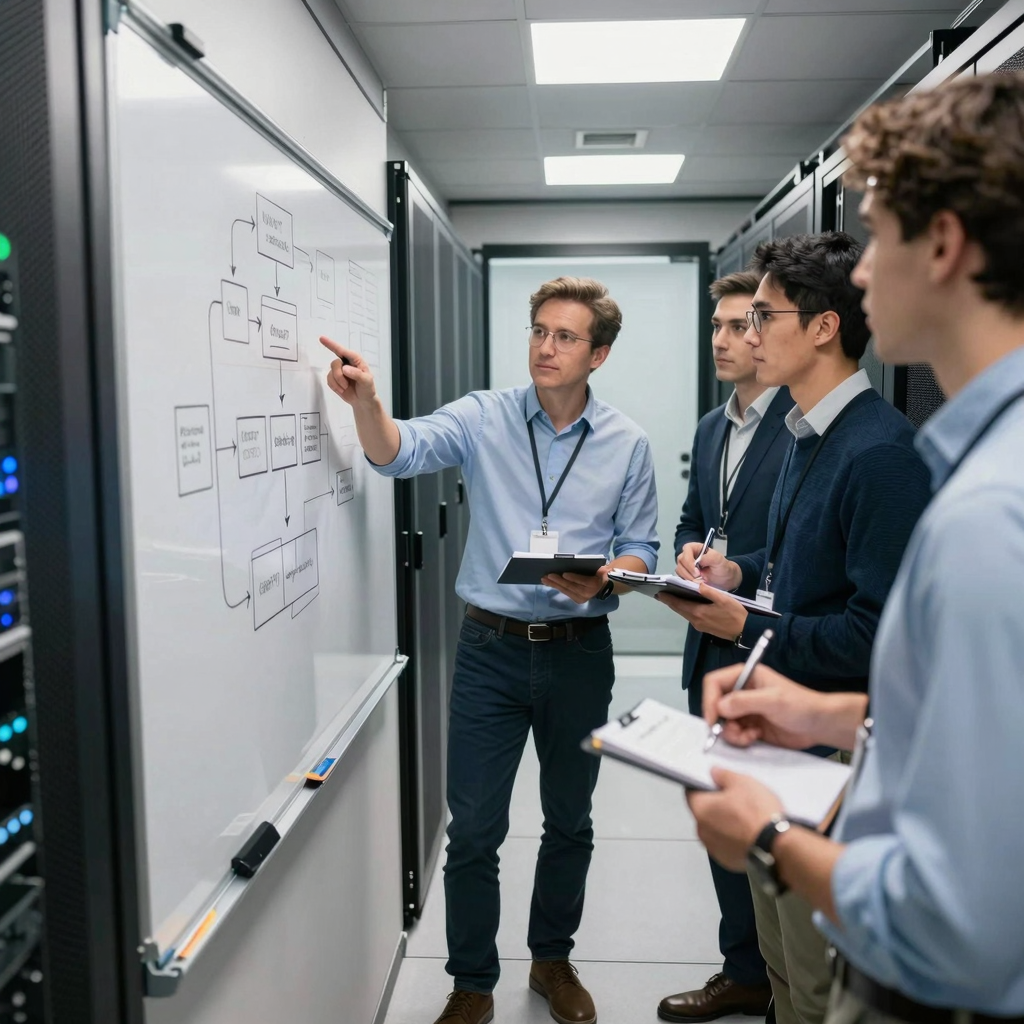
You extend your existing CI/CD pipeline — the automated process of building, testing, and deploying code changes — rather than building a parallel one, but you add stages that traditional software doesn't need. A standard CI/CD pipeline validates code correctness. An ML deployment pipeline additionally needs to validate data quality (schema checks, null-rate thresholds, distribution sanity checks), run the candidate model against a held-out evaluation set with a hard performance gate, and support shadow deployment — running the new model alongside the old one on live traffic without serving its output — before a full rollout.
Containerization (packaging an application with everything it needs to run consistently across environments) via Docker and orchestration via Kubernetes give you the same deployment primitives for model-serving containers that you already use for your application services, which means canary releases and instant rollback apply equally to a bad model version as to a bad code deploy. This is not a nice-to-have: model vs monolith deployment risk is asymmetric in exactly the way that matters — a bad code deploy usually errors loudly; a bad model deploy degrades silently, so your rollback trigger has to be a business metric threshold, not just an error rate.
Build vs Buy: Should You Assemble Your Own MLOps Stack or Use a Managed Platform?
For most teams below a certain scale, buying beats building, and the calculus mirrors every other infrastructure decision AEGONTECH walks clients through — the same in-house-vs-outsourced tradeoff that applies to authentication, payments, or observability. Managed platforms (SageMaker, Vertex AI, Azure ML, or focused tools like Weights & Biases for experiment tracking) bundle versioning, monitoring, and deployment orchestration into a single billed service, and for a team without a dedicated ML platform engineer, that bundling is worth the premium.
The threshold where building your own stack starts to make sense is roughly when you're running more than a handful of models in production, need custom compliance controls (relevant if you're pursuing SOC 2 or handling regulated data), or your inference cost at the volume you operate would make a managed platform's markup genuinely expensive rather than a rounding error. AEGONTECH has taken both paths across our own product line — a lightweight managed setup powering a recommendation feature on Dolfy.ai, and a more custom pipeline for Mimicall.app, where tighter latency and per-call cost control mattered more than a managed platform's convenience — and the deciding factor was never "what's more sophisticated," it was "what does our actual traffic and team size justify." That's the same discipline we apply to every architecture decision we help clients make: match the tool to the scale you have, not the scale you aspire to.
FAQ
Does every AI feature need a full MLOps pipeline? No. A low-traffic internal tool calling a third-party LLM API with no fine-tuning has a much smaller operational surface than a custom model you train and retrain. Match the rigor to the risk: customer-facing decisions (pricing, fraud, eligibility) need monitoring and versioning from day one; low-stakes internal experiments can start lighter.
What's the single highest-leverage first step if we have nothing in place today? Add data and model versioning before you add monitoring dashboards. You can't meaningfully monitor drift against a baseline you can't reproduce, and reproducibility is the foundation every other MLOps practice depends on.
How is this different from the RAG (retrieval-augmented generation) pipeline decisions we've already made? RAG architecture decisions — vector database choice, chunking strategy — govern how a model retrieves context at inference time. MLOps governs the lifecycle around any model, RAG-based or not: how it's versioned, deployed, monitored, and retrained over its operational life. Teams often solve the RAG problem well and then discover they still have no answer for "how do we know if this got worse."
Can a small engineering team realistically own this, or does it require a dedicated ML platform hire? A small team can own a lean version using managed tooling; the failure mode is trying to hand-roll versioning, monitoring, and deployment orchestration from scratch, which is where teams burn months building infrastructure instead of shipping the feature.
Getting This Right the First Time
"A model you can't monitor is a decision you can't defend" — that's the operating principle worth pinning above every AI roadmap. The teams that get burned by MLOps aren't the ones with bad models — they're the ones who treated the model as the finish line instead of the starting point of an operational commitment. Versioning, drift monitoring, and a deployment pipeline built for ML's specific failure modes are the difference between an AI feature that compounds in value and one that quietly becomes a liability six months after launch.
If your team is scoping an AI feature and wants a second opinion on whether your deployment plan will actually hold up in production, AEGONTECH LLC works with engineering leaders on exactly this kind of architecture decision — from initial technical due diligence through to the monitoring and retraining loop that keeps a model trustworthy long after launch. A short consultation is often enough to catch the gap before it costs you a production incident.