Real-Time Collaboration Architecture: The CRDT vs Operational Transform Decision Behind Every Google-Docs-Style Feature

Every product team eventually hits the same wall: two people editing the same document, the same kanban card, or the same design canvas at once, and the app has to decide whose keystroke wins. Google Docs solved this over a decade ago; Figma, Notion, and Linear built entire categories of software on top of getting it right. At AEGONTECH LLC, we've shipped real-time collaborative features across several of our own products, and the architecture decision behind them — CRDTs versus Operational Transform — turns out to be one of the most consequential and least understood choices in modern software engineering. Get it wrong and you'll spend the next two years fighting data corruption bugs that only reproduce under bad Wi-Fi.
This isn't a niche problem anymore. Real-time, multi-user editing has moved from "nice-to-have collaboration feature" to baseline expectation across project management tools, design software, CRMs, and even internal admin dashboards. If your roadmap includes anything resembling "multiple people working on the same thing at once," this decision will shape your engineering velocity for years.
Key Takeaways
- Real-time collaboration is a distributed systems problem wearing a UI costume — the hard part is conflict resolution, not the cursor animation.
- CRDTs (Conflict-free Replicated Data Types) and Operational Transform (OT) solve the same problem with fundamentally different trade-offs around complexity, offline support, and server dependency.
- Sub-100 to 250 millisecond round-trip latency is the generally accepted threshold at which collaborative editing feels synchronous rather than laggy to end users.
- Retrofitting real-time collaboration into a product architected for single-user, request-response workflows typically costs significantly more engineering time than designing for it from the start.
- Most teams don't need to build a sync engine from scratch — but every team needs to understand the trade-offs well enough to evaluate the option they choose.
What Is Real-Time Collaboration Architecture, and Why Does It Matter Now?
Real-time collaboration architecture is the set of systems that let multiple users read and write shared state simultaneously while keeping every client's view consistent — without one user's edit silently overwriting another's. It matters now because user expectations have shifted: a project management tool where teammates can't see each other's cursors, or a document editor that requires a manual "refresh to see changes" button, reads as dated software in 2026.
The technical challenge sits squarely in distributed systems territory. When two users edit the same paragraph, database row, or design layer within milliseconds of each other, over networks with different latency and reliability characteristics, someone has to define what "correct" means when those edits arrive out of order. This is a fundamentally different problem than the CRUD (Create, Read, Update, Delete) request-response pattern most web applications are built around, where one user's write simply overwrites the previous state and nobody else is watching in real time.
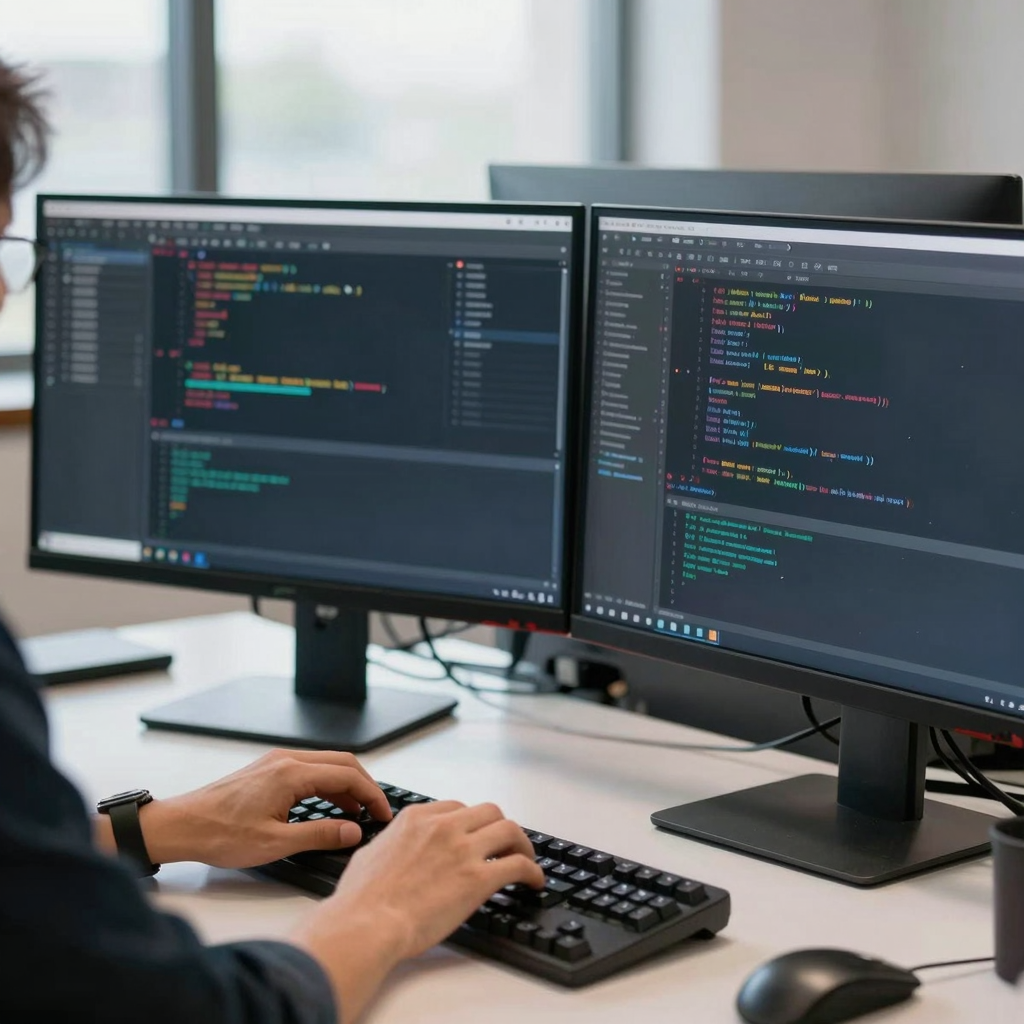
Traditional architectures lean on database-level locking or "last write wins" semantics, both of which fall apart the moment two people are actively typing in the same sentence. That's where CRDTs and Operational Transform come in — two mathematically distinct approaches to the same underlying problem: how do you let clients apply local edits instantly, then reconcile everyone's history into one consistent, correct result.
CRDTs vs Operational Transform: Which Approach Should You Actually Use?
For most new products in 2026, CRDTs are the more pragmatic default — they don't require a centralized server to mediate every operation, which simplifies offline support and horizontal scaling; OT remains the right call mainly when you're extending an existing OT-based system like a legacy rich-text editor.
A CRDT (Conflict-free Replicated Data Type) is a data structure engineered so that concurrent updates from different clients can always be merged automatically into the same final state, regardless of the order they arrive in — mathematically, the merge operation is commutative, associative, and idempotent, which is a precise way of saying "the order you apply changes in doesn't matter, you always land in the same place." Popular implementations like Yjs and Automerge let each client hold a full local replica of the document and merge changes peer-to-peer or through a lightweight relay server, which is why CRDT-based apps tend to have genuinely robust offline-first behavior — a user can keep editing on a plane, then sync seamlessly on reconnect.
Operational Transform, the older approach pioneered by Google Docs and Google Wave, takes a different path: it defines transformation functions that rewrite an incoming operation against every operation that happened concurrently, so that applying "insert character at position 5" still lands correctly even if someone else already inserted five characters earlier in the document. OT requires a central server to serialize and broadcast the canonical operation order, which makes it more bandwidth-efficient for text-heavy documents but structurally harder to make work offline, and notoriously difficult to implement correctly — the transformation functions have edge cases that took Google's own engineers years to fully harden.
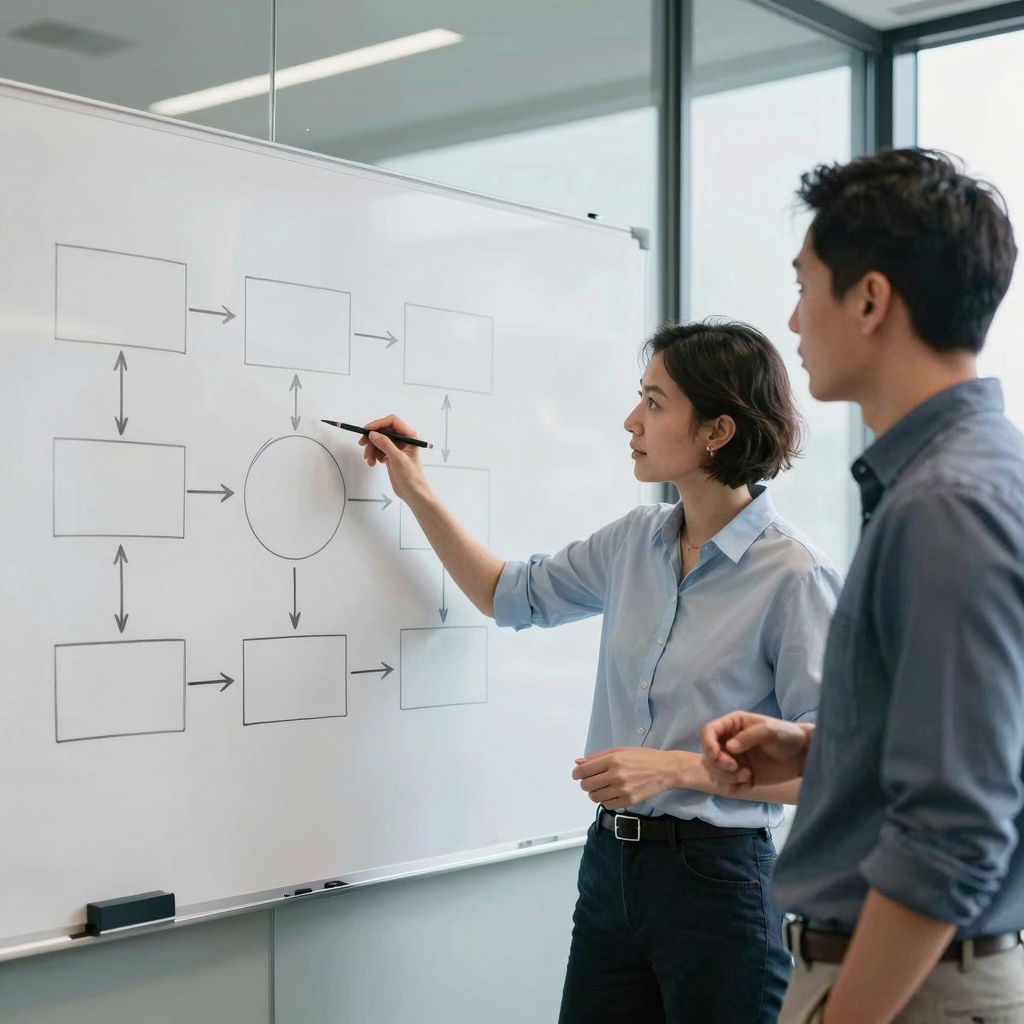
In our own engineering work, we've found CRDT libraries have matured enough that hand-rolling OT transformation logic rarely makes sense for a new product. Benchmarks published by the Yjs project show CRDT merge operations completing in single-digit milliseconds even under thousands of concurrent operations, and the library ecosystem (Yjs, Automerge, Liveblocks, Replicache) has closed most of the historical gap in bundle size and memory overhead that used to make CRDTs a hard sell for production frontend code.
How Do You Handle Conflict Resolution, Presence, and Offline Sync?
You handle it by separating three distinct concerns that teams often conflate into one "real-time" bucket: data conflict resolution (CRDT/OT), ephemeral presence state (cursors, "who's viewing"), and network transport (WebSocket connections, reconnection, and offline queuing).
Presence — showing that a teammate is online, where their cursor is, what they're currently viewing — is deliberately not part of your conflict-free merge logic. It's ephemeral, doesn't need durability, and is typically broadcast over a WebSocket (a persistent, two-way network connection that lets a server push updates to a client instantly, instead of the client repeatedly asking for them) or a service like Pusher, Ably, or a self-hosted Node.js WebSocket layer, separate entirely from the CRDT document sync channel. Conflating the two is a common early architecture mistake that makes both systems harder to reason about and debug independently.
For offline sync, the practical pattern is: queue local operations in IndexedDB or a similar client-side store while disconnected, apply them optimistically to the local UI immediately, then replay and merge them against the server's canonical state on reconnect. A well-designed CRDT layer makes this almost boringly reliable — the merge guarantees mean replay order doesn't produce corruption, only the correct convergent result. This is precisely the kind of resilience layer we design into products like Dolfy.ai, where reliable behavior during flaky connectivity is a core product requirement, not an edge case.
What Does a Production-Ready Real-Time Stack Actually Look Like?
A production-ready stack typically combines a CRDT or sync library on the client, a lightweight relay or authority server for broadcasting and persistence, and a durable database as the system of record — none of which requires reinventing distributed consensus from scratch.
A common, well-tested pattern in 2026 looks like: React or Next.js on the frontend holding a Yjs or Automerge document instance; a Node.js WebSocket server (or a managed service like Liveblocks or PartyKit) relaying binary CRDT updates between connected clients with sub-100ms latency in most regions; and PostgreSQL or MongoDB persisting periodic snapshots of the merged document state so it survives server restarts and supports version history. Containerization with Docker and orchestration via Kubernetes — running on AWS, Azure, or GCP — lets the relay layer scale horizontally as concurrent session counts grow, while a CI/CD (continuous integration/continuous deployment) pipeline — the automated process that tests and ships code changes without manual intervention — keeps sync-protocol changes from silently breaking older connected clients mid-session, which is one of the nastier production incidents this architecture can produce if version compatibility isn't guarded carefully.
The single most expensive mistake we see teams make is treating real-time sync as a feature to bolt onto an already-shipped single-user data model — retrofitting a request-response CRUD schema to support concurrent multi-user editing routinely costs three to four times the engineering effort of designing the schema with CRDT-compatible document structures from day one. If collaboration is even plausibly on your two-year roadmap, that's an architecture conversation worth having before the first schema migration, not after your third.
When Should You Build This In-House vs Use a Third-Party Sync Engine?
Use a managed sync engine (Liveblocks, PartyKit, Ably Spaces, or similar) when real-time collaboration is a supporting feature of your product; build the CRDT and relay layer in-house when it's core to your product's competitive differentiation and you need full control over data model, latency, and self-hosting requirements.
Managed services meaningfully compress time-to-market — most integrate with React and Next.js in an afternoon and handle presence, conflict resolution, and reconnection logic out of the box, at a cost that scales with concurrent connections. For a startup validating a collaborative feature before committing further engineering investment, that trade-off almost always favors the managed path. A feature that takes six weeks to build in-house and three days to integrate from a vendor is not a feature worth building in-house unless it's your actual product. Once you have product-market fit and clear evidence collaboration is core to retention, migrating the highest-value paths in-house for cost and control reasons becomes a reasonable phase-two decision — not a phase-one one.
At AEGONTECH, our approach on client engagements is to prototype with a managed sync engine first, instrument real usage patterns, and only justify an in-house build when the data shows it's warranted — a pragmatic, evidence-driven sequencing that mirrors how we approach architecture decisions across AEGONTECH LLC's engineering practice generally: start with the option that proves the product hypothesis fastest, then invest in ownership once the returns are clear.
Frequently Asked Questions
Is real-time collaboration overkill for a B2B SaaS product with small teams? Not necessarily — even five-person teams benefit measurably from seeing who's actively working on a record, and the UX cost of not having it (stale data, accidental overwrites) tends to surface as support tickets and churn risk well before team size makes it "obviously" necessary.
Can we add CRDT-based collaboration to an existing product without a full rewrite? Usually yes, if you scope it to specific high-value surfaces (a shared editor, a kanban board) rather than converting your entire data model at once — most teams successfully layer a CRDT document type alongside their existing REST or GraphQL API rather than replacing it wholesale.
Does real-time sync work well on mobile, especially with unreliable connections? CRDT-based approaches are specifically well-suited to mobile because the offline-first, optimistic-local-update pattern tolerates dropped connections gracefully; this is a meaningfully different engineering bar than OT, which assumes a more consistently available server connection.
How does this affect our SOC 2 or data compliance posture? Real-time sync doesn't inherently change your compliance obligations, but persisted document history and presence data are still user data subject to the same access control, encryption-at-rest, and retention policies as everything else in your system — it should be scoped into your existing SOC 2 (a widely recognized security and availability audit standard for SaaS vendors) controls, not treated as a separate system.
Getting This Right the First Time
Real-time collaboration is one of those architecture decisions where the visible feature — cursors, live edits, presence avatars — is the easy 10%, and the invisible plumbing of conflict resolution, offline queuing, and version compatibility is the hard 90%. Teams that treat it as a UI feature instead of a distributed systems decision tend to discover the difference the expensive way, in production, under real user load.
If you're weighing whether to build this in-house, evaluate a managed sync engine, or need a second opinion on an architecture that's already fighting you, AEGONTECH LLC works with engineering teams on exactly these decisions — from initial system design through production hardening. You can see more about how we approach this kind of work at AEGONTECH LLC, or reach out directly to talk through where your product currently sits on this spectrum.